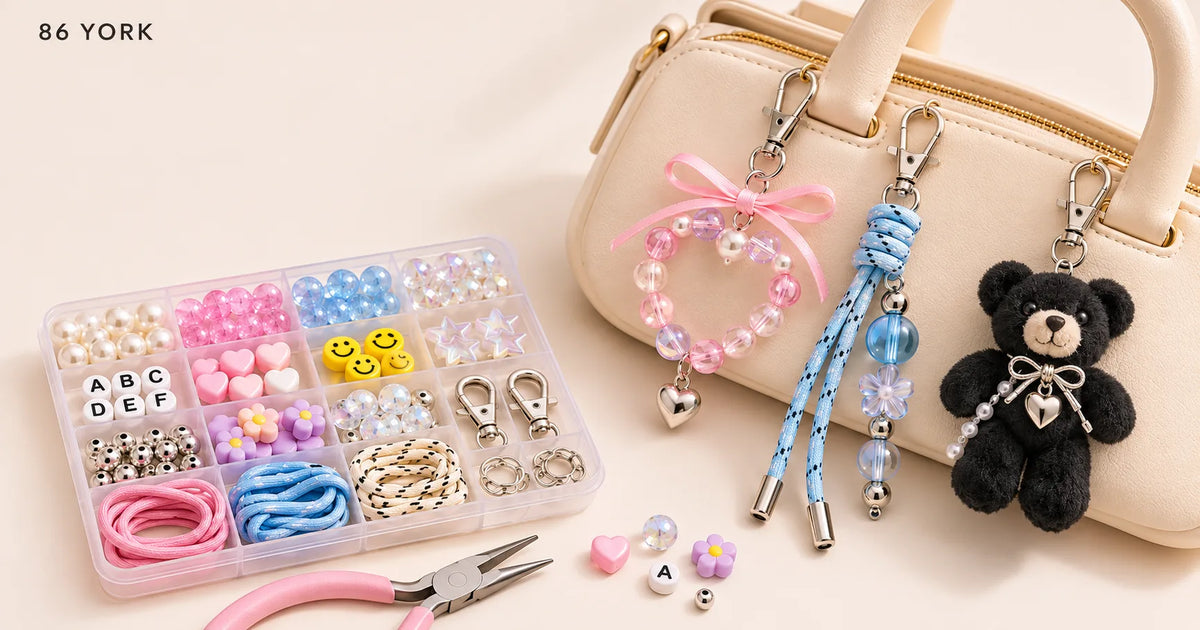
A bag charm kit is a boxed set of beads, cords or chains, and a clip that lets you build your own purse charm at the kitchen table. Branded kits in the US sell for roughly $35 to $58, yet most of what’s inside costs far less when bought loose. This guide shows what a good DIY bag charm kit should include, where cheap kits cut corners, and how to make beaded bag charms that survive daily commutes.
Bag charms haven’t slowed down. Fashion search platform Lyst recorded a 153% jump in searches for them, and wholesale marketplace JOOR reported a 12-fold rise in orders for these small accessories during 2025. A lot of that money went to collectible toys and plush bear charms, plus designer pieces priced in the hundreds. A kit sits at the other end: inexpensive, personal, and finished in one afternoon.
What’s actually inside a bag charm making kit
Read a handful of product listings and the same formula appears every time. Kits are built on two things: a big pile of beads and a small number of bases.
BaubleBar’s DIY Bead Kit lists more than 400 beads, four A to Z letter sets and 10 paracord bases for $58. The MoMA Design Store version is leaner, with 275 beads and 6 bases for $48, rated for ages 6 and up. At the budget end, a Kohl’s plush kit costs $14.99 and makes just two charms.
Look at those numbers closely and you’ll see where the value sits. You’re paying mostly for bead variety and a tidy case. The bases set the real limit: ten bases means ten charms, and then you’re shopping again.
A typical beaded bag charm kit includes:
- Letter beads for names and initials
- Novelty beads such as hearts, fruit, smiley faces and zodiac signs
- Pre-made cord or paracord bases with a clip already attached
- Sometimes jump rings, a length of chain and small pliers
The cord base is the smartest part of any kit. It removes the fiddly job of crimping wire, so a beginner only has to thread and knot. To see how strands, knot and clasp sit together on a finished piece, look at a blue paracord and glass bead bag charm before you start.
Kit or loose supplies: which one makes sense?
A kit wins when you’re crafting with kids, hosting a party, or giving a present that should arrive in a box. The organized case earns its price when six people are digging through beads at the same table, and kid-friendly picks like a rainbow striped sweater teddy bear bag charm make good inspiration for the theme.
Loose supplies win once you plan to make more than ten charms, or when you want metal instead of plastic. Craft suppliers sell packs of 25 gold-plated stainless jump rings for a few dollars, and lobster clasps come in multipacks at similar prices. That covers hardware for half a dozen sturdy charms for under ten dollars, and it gets you closer to the polish of a gold-tone heart charm chain.
There’s also a middle route that rarely gets mentioned: start with a finished charm and customize it. A ready-made gold-tone heart and key charm bag chain already has its clasp and links sorted, so you only add a letter bead or two. For anyone who dislikes pliers, it’s the quickest path to a personalized bag charm.
What do you need to make bag charms at home?
Better Homes & Gardens published a craft club guide on beaded charms, and its supply list is about as short as it gets: beads and charms, jewelry wire, jump rings, lobster keyrings, needle-nose pliers and wire clippers. That’s a complete starter set.
Kits rarely explain three things that decide whether a charm lasts.
Clasp size matters more than bead choice. A tiny lobster clasp looks fine on a necklace and lost on a tote strap. Aim for about 8 by 12 mm or larger, and for big handbags consider a keyring or swivel clasp instead, the way a braided cord charm bag strap uses heavier hardware.
Thin jump rings are where charms fail. Every jump ring has a split, and jewelry tutorials warn that the gap can work open over time. A bag swings and knocks against things all day, so pick the thickest ring your bead holes allow and close it until the ends meet flush.
Mix materials on purpose. One pearl strand, one cord strand and a pendant looks designed, while ten identical beads look like a lanyard. A green stone and pearl beaded bag charm shows how two textures can share one clasp without clashing.
How to make a beaded bag charm, step by step
This method works with any DIY bag charm kit or with loose parts.
- Plan the strands. Lay beads on a towel in two or three rows at different lengths, so they won’t tangle into one clump.
- String each strand on beading wire or the kit’s cord, leaving about 3 inches spare at the top.
- Finish the bottom with a double knot or a crimp bead below the last bead. Add a small pendant here if you have one.
- Gather the tops. Loop every strand through one jump ring, or knot cord strands together right under the clasp.
- Attach the clasp by closing the ring through its loop. Then tug hard. If it opened in your hand, it would have opened on the train.
- Trim excess wire, clip the charm to a bag and give it a good shake.
Spacing is what separates a homemade look from a shop-bought one. On a pearl beaded flower bag charm, the flower cluster hangs low and carries the weight, while plain pearls run up to the clasp.
Color needs the same discipline. A multicolor beaded bag charm looks balanced because each strand repeats a similar mix, so no single strand shouts louder than the rest.
Personalized bag charm ideas that don’t look homemade
Letter beads are the main reason people buy a bag charm making kit with letters. Names work, but initials age better, and three letters fit neatly on one strand. A small lavender mushroom letter R bag charm proves one letter is often enough.
Some easy bag charm ideas for beginners:
- One initial plus one motif. Pair a letter with fruit or a heart, like a coral pink strawberry letter A bag charm, so it feels personal without spelling your full name.
- A pearl initial for work bags. Something quiet, such as a gold-tone pearl bead initial A bag charm, suits a leather tote better than neon plastic.
- Zodiac signs for gifts. When you’re unsure which initials someone would want, a star sign is a safe bet, and a red galaxy Scorpio bag charm shows how bold a single sign can look.
- Stacking. Clip your homemade strand beside a bought piece. A soft plush teddy bear bag charm next to a beaded strand is the layered look that dominated 2025.
Actress Jane Birkin, who covered her own Hermès bag in trinkets during the 1980s, is often called the original bag charm stacker. As far as anyone knows, she never used a kit.
How to attach charms to a handbag without damage
Clip onto hardware rather than fabric. The handle base or a metal D-ring is the safest spot, because a clasp hooked through a stitched leather loop will scratch and stretch it over time.
Heavy charms belong at the handle base, away from the zipper pull. Metal pieces like a gold-tone multi-charm chain bag charm can rub soft leather, so hang them where they swing clear of the bag’s front panel.
For delicate or light-colored bags, softer materials are kinder. A red leather strawberry bag charm won’t scuff the surface the way a cluster of metal charms can.
Quick answers
Is a bag charm kit good for adults?
Yes, if you check the bead style first. Many kits target ages 6 and up with chunky acrylic beads, so adults who want a refined look should choose kits with metal or mother-of-pearl beads, or buy loose supplies.
How many charms does one kit make?
That depends on the bases, not the beads. Count the cord bases or clasps in the listing, since each cord bead bag charm needs its own.
Can I sell charms made from a kit?
Read the kit maker’s terms before you do. If selling is the plan, wholesale supplies usually cost less per piece anyway.
Where to start
For a first attempt, buy one small kit or about $10 of loose hardware, make two charms and wear them for a week. You’ll quickly learn whether your clasps hold and which strand lengths tangle. If you’d rather skip pliers completely, pick a finished base such as a gold-tone turquoise evil eye charm bag chain and add one bead that’s yours.